
The Importance of Choosing The Right Overlanding Awning
No one goes off the beaten path without having one of two reasons for it – fun or work. When it comes to the former, it’s essential that you go with an open mind and a bed full of gear. This is exactly why overlanding has become so popular, the ability to travel the road that not many do, to enjoy nature and drive your vehicle.
All that, without nosy neighbors or annoying other people’s peace. Overlanding is more than just a road trip, it’s an adventure in the wild that combines off-roading, camping and hiking with only some essential gear and equipment.
Types of Overlanding Awnings
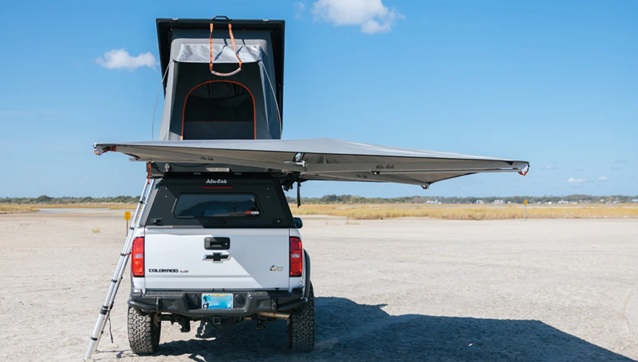
Batwing
Also known as 270° awnings, they look exactly like the wing of a bat. Batwing awnings offer the most amount of coverage from the sun and rain. With this equipment piece, you can set up your cooking area as well as your leisure area without feeling crammed. The batwing awnings for cars are usually designed for the left side so that they’re able to cover the driver’s side.
Rooftop
As you’d expect, a rooftop awning is one that is mounted on the roof of your 4×4, providing cover without the need for poles. Also called self-supporting overlanding awnings, they are much easier to set up than batwing awnings. However, because of their location and design, rooftop awnings don’t offer as much coverage and they also need to be mounted on top of the roof, where you won’t be able to put up a tent or roof racks.
Side
With a side awning, you get the simplest and most affordable solution one could for your overlanding rig. They are quite small and only offer a shade on one side of your vehicle, but they are easy to set up and don’t take up as much space as any of the above two. For a morning cup of coffee or enjoying a sunset/sunrise, side overlanding awnings are perfect.
What Matters in an Overlanding Awning
Material
While there are different types of materials, the most protective and durable are going to be ripstop polyester and heavy canvas. They are waterproof, UV-resistant, heavy-duty fabrics that have high UPF ratings, making them ideal for outdoor use. If you go for the latter, you’ll get an awning that is also well protected from debris. The former needs to be in a bag made of heavy-duty PVC to be protected from trail debris.
Compatibility
Another factor to keep in mind is whether or not the awning actually fits on your vehicle. Be it a ground or freestanding awning, having enough space on the roof of your vehicle or rails, being the right length and being compatible with roof racks or roof cage/basket matters a lot.
Installation
Setting up and installing the awning shouldn’t be too complicated. It usually takes two people to set it up for the first time and to install it. However, some 4WD car awnings can make the latter a complex process with unique mounting hardware and tools. Make sure you don’t need a helping hand or if you do need it, it’s only for one step of the installation process to make using the awning as easy as it gets.
Size
The size of the awning is determined by the size of your vehicle’s roof and it directly affects its compatibility with it. While you can get a larger awning, know that it will be much more difficult to set up and install, but you’ll get more coverage as a result of your hard work.
Accessories
Although they are a piece of fabric stretched out by two or more poles, awnings for cars are able to accommodate certain accessories. With the correct brackets and hardware, you can add walls, lighting, windbreaks, full mesh enclosures and rooms. But know that alongside practicability, all this adds complexity and weight.
Benefits of Overlanding Awnings
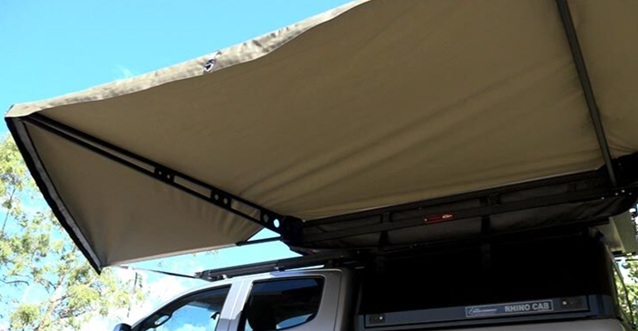
Protection
Maybe not in the same way as aftermarket truck bumpers, auto awnings still provide a decent level of protection, be it from the rain, wind, bugs or just prying eyes. You’re able to get a bit of home comfort without having to spend a whole afternoon to get what little an awnings offer.
Space
With an awning, you’re able to create your own area of peace or fun, be it alone or with friends. While it’s not a solid structure, the beauty of having an awning in the wild is exactly that, as it makes for a versatile solution that you can set up anywhere your vehicle can go.
Shade
An often overlooked factor of awnings is that they, first of all, provide shade from the sun and that alone makes them far better than any other similar 4WD accessory. Overlanding can be quite exhausting and sitting or standing in the sun after a long day of driving over challenging terrain can be even more excruciating. Therefore, with an awning, you’re safe from the sun’s UV rays that can also make reading or finding your way home on your GPS device difficult.

About Author

alex
?You can always edit a bad page. You can’t edit a blank page. Likes: ❤️ Beer ?, Pizza ? Dislikes:? Mice?, Barber ? Favorite song: ? Hurts - Wonderful Life