
The Importance of Coilovers: How They Work, Types, and Buying Tips
When it comes to upgrading your vehicle’s driving dynamics and on-road stance, few modifications come close to dedicated coilovers. Short for ‘coil springs over shocks’, these pre-assembled suspension setups are staples in competitive racing and the wider tuning community, providing clear handling benefits over the stock suspension.
What are Coilovers?
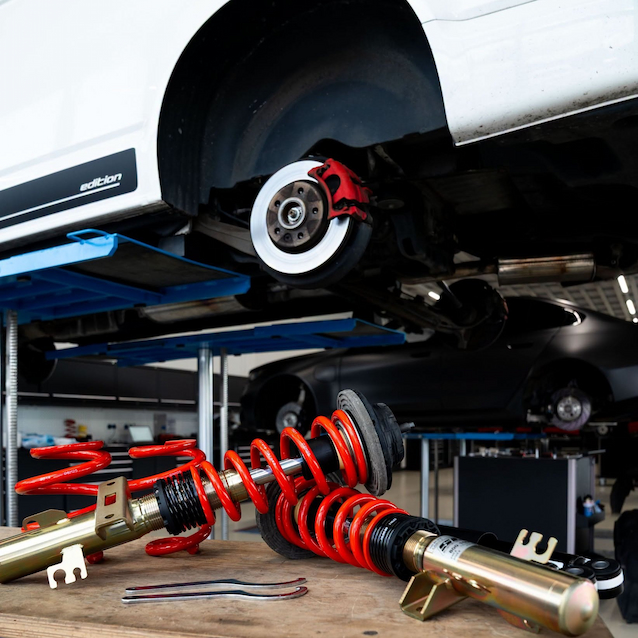
Coilovers are suspension units that combine a coil spring and shock absorber into a single assembly. The springs support the vehicle, while the shock absorbers control how quickly they compress and rebound during bumps, braking, cornering, and acceleration.
Compared to factory setups, calibrated coilover kits provide more direct vehicle control, allowing adjustments to ride height for a lower center of gravity, spring preload rates when managing spring tension and cornering weights, and damping when adjusting steering control for more direct response or comfort. In short, coilovers unlock comprehensive suspension adjustability, providing the ingredients for faster lap times, more direct steering or an aggressive, slammed look.
Main Types
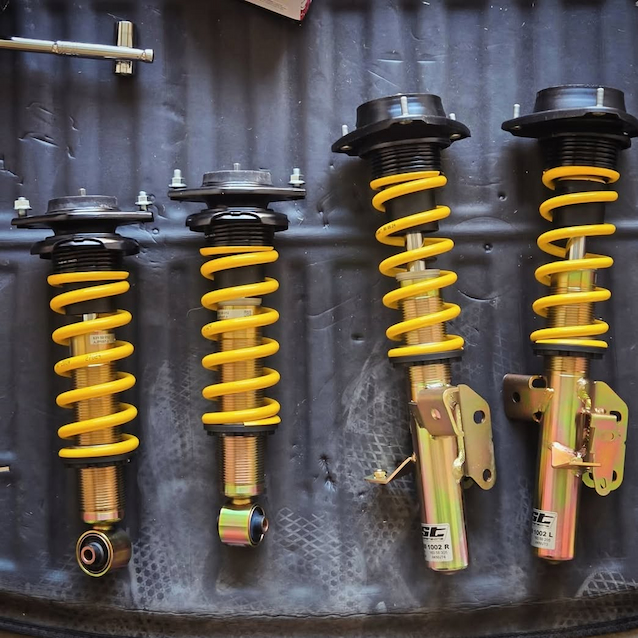
Based on design and what can be adjusted, coloivers are categorized into the following types:
- Coilover sleeves: These affordable assemblies slide over factory shocks and use a threaded collar to allow for height adjustment. However, they lack adjustable damping and rebound, which means less versatility on different road surfaces compared to cheaper, more straightforward ride height options like simpler, more reliable lowering springs.
- Non-damping adjustable: A type of full-bodied coilover replacement, these allow for changes in ride height by simple adjustments to the shock body or spring perch, but with shock stiffness fixed straight from the factory. They balance overall vehicle handling and stance without negatively eating into everyday comfort or usability. They are relatively affordable and easy to install.
- Damping adjustable: Another full-bodied option, these allow adjustments to both spring height and overall stiffness. Their setup ensures custom comfort or spring stiffness settings, meaning comfort tuned for street use or a more taut ride for track use. Core handling benefits are improved body control in high-speed cornering and braking, and calibrated spring and shock assemblies that work in any driving scenario.
- Full coilovers with camber kits: These are track-specific setups, allowing for independent height, preload and damping adjustment, as well as changes to camber, or the angle at which wheels sit relative to the road surface. Key benefits include improved cornering traction, precise wheel alignment tailored to specific tracks, and fitting wider wheels with tires in lower profiles for a lower center of gravity.
Based on internal shock construction, coilovers can be further divided into:
- Twin-tube coilovers: Featuring an inner cylinder for the piston and an outer cylinder housing the hydraulic fluid, twin-tube coilover kits are preferred for improved ride comfort and daily street use. They provide longer suspension travel, which helps absorb bumps and obstacles, at the expense of slightly slower response and more damping fade during prolonged track use.
- Monotube: Monotube coilovers use a larger, single cylinder for both the piston and fluid. The design means more precise hydraulic fluid control and faster response to road changes. They also offer better heat management with no risk of aeration or damping fade during serious track work.
Core Benefits and Comparison to Other Suspension Upgrades
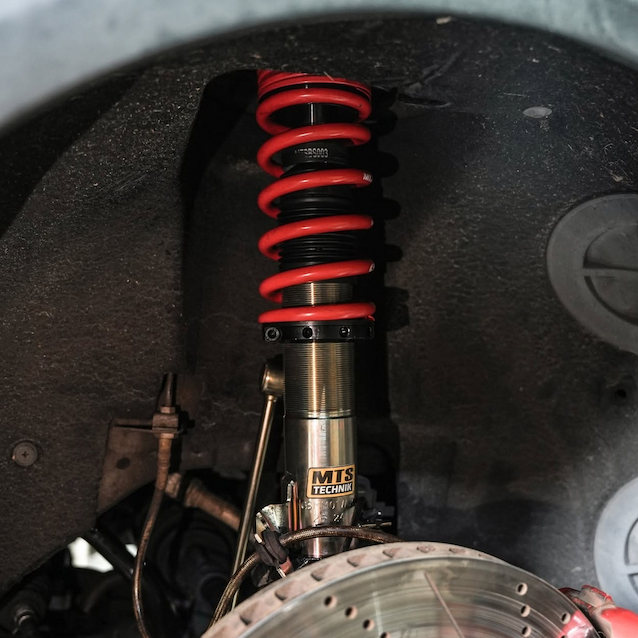
Unlike factory spring and shock combos, coilovers provide ample spring height adjustment, either by turning the threaded collar or adjusting shock perches. Lowering the vehicle improves the center of gravity, resulting in improved traction and cornering balance. Conversely, vehicles can also be lifted, for instance, to fit larger wheel and tire combos or increase ground clearance on poor-quality roads.
Units with damping adjustment let drivers fine-tune how the shocks control spring movement and overall ride quality. Want more comfort for daily driving? Turn the knob. Alternatively, dial them to a stiffer setting for less body roll and sharper steering response. This can also improve overall handling, with less oversteer and understeer and more even tire contact with the road, which can help reduce tire wear.
High-end coilovers provide camber and caster adjustment, letting drivers tune the suspension for more cornering grip and straight-line stability without having to resort to expensive and complicated control arms. Lastly, choose coilover kits when dialling in the look you’re after, for instance when masking wheel and tire gaps or going for a more aggressive, lower stance.
Compared to other suspension setups and aftermarket upgrades, coilovers provide more ride height adjustment than comparable lowering springs, more control and adjustability than under-damped OEM factory setups, and more predictable compression and rebound rates than complex air suspension systems, often at half the cost.
When buying, consider where and how you drive, the level of performance and adjustability you need, and your overall budget. With options that get more from daily street or dedicated track use, coilovers are the suspension upgrades you’ll want in your car.



About Author

alex
?You can always edit a bad page. You can’t edit a blank page. Likes: ❤️ Beer ?, Pizza ? Dislikes:? Mice?, Barber ? Favorite song: ? Hurts - Wonderful Life