
Game-Changing Grip: The Importance of Football Cleats
As with any other sport, football demands the right gear, starting from the ground up. American football cleats are built with that specific sport in mind. With studded outsoles, this specialized athletic footwear is tailored to the needs of the game, offering benefits that regular footwear may not.
Although you can play casual games in regular shoes, it’s highly recommended to invest in a pair of American football cleats as they provide better traction, stability, and ankle protection on grass and turf.
What Is the Purpose of Cleats?
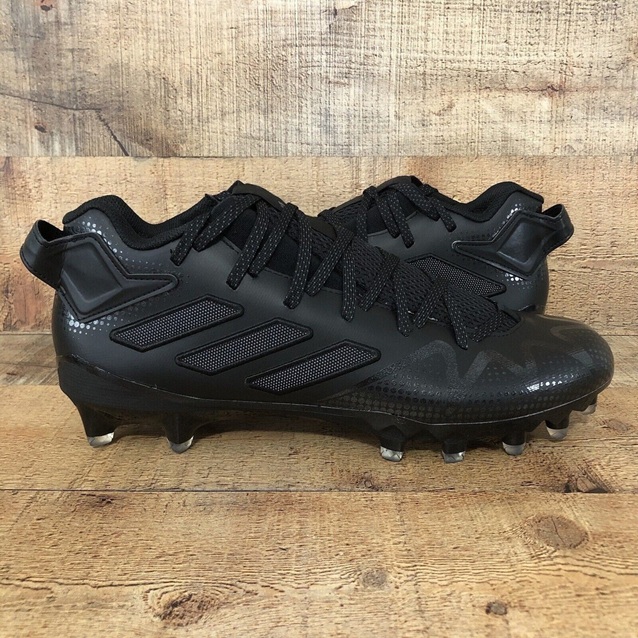
Cleats are small and structured traction elements attached to the outsole of football shoes to interact directly with the playing surface. They usually appear as raised studs or moulded grips positioned in specific patterns under the forefoot and heel.
These studs can come in different shapes and profiles. Some are longer and more pointed, often found in screw-in designs that can be removed and replaced depending on the field conditions. Others are shorter and rounded. They create a lower-profile grip that spreads contact across the surface. You may also notice cone-shaped forms that grip and release from the ground differently. As for the profile, some studs sit higher off the sole, while others stay low and close to the ground for a flatter setup.
Material-wise, most cleats are made from durable rubber or TPU (thermoplastic polyurethane). These materials can handle repeated impact, pressure, and friction on the field. In some performance models, lightweight composites are used to reduce weight while maintaining structure. Next, cleats can differ in pattern. This refers to how the studs are arranged across the outsole.
They are rarely placed randomly. Instead, they follow engineered layouts that balance traction and release. In some designs, studs are spread evenly for balanced contact with the ground. In other models, they can be grouped into tighter clusters to focus grip in key areas like the forefoot. In some shoes, the studs are arranged at angles or in aligned patterns to help guide movement during acceleration and quick direction changes.
The Importance of Soccer Cleats for the Game
Cleat shoes connect the player directly to the ground. Every step, cut, and sprint depends on how the foot grips the field, and cleats make that possible. They dig into grass or turf and give players control when they move fast or change direction. Players rely on cleats to stay steady during action. The studs bite into the surface and help the foot push off cleanly. This makes acceleration sharper and turns more controlled. Without that grip, movement feels loose and harder to manage.
Cleats also help players handle different surfaces. Grass, wet ground, and artificial turf all react differently. Cleat designs adjust through stud shape, length, and layout to match those conditions. This keeps the traction more consistent during play. The structure inside the shoe also works with the outsole. It holds the foot in place and reduces sliding inside the shoe. That helps players stay balanced when they stop suddenly or take contact.
Different positions also use different cleat setups. Some players need more grip for speed. Others need more stability for power and contact. Cleat shoes adapt to those needs through their design. To sum up, cleats support every part of movement on the field. They help players run faster, cut sharper, and stay balanced under pressure. That’s why they sit at the centre of performance in American football.
The Difference Between Soccer and Football Shoes
To British sports lovers, the shoes worn by footballers are known as boots. In the US, however, they’re more often called cleats (a term that refers to the small protrusions on the outsole). However, the variation isn’t only in the name. There are subtle differences between the two, mainly in how the sole grips the ground and how the upper part protects your foot.
Soccer players often speed up, slow down, turn, and kick the ball. Therefore, soccer boots are made to be low to the ground, lightweight, and have evenly spaced studs. They often come with a more streamlined and close-to-the-foot design for better control and feel on natural grass.
American football, on the other hand, has more stopping and starting, as well as more physical contact. This said, many cleats for football are designed for quick sprints and extra support to handle collisions and blocking. They tend to include a wider range of stud patterns, sole structures, and surface-specific designs, depending on the playing conditions.
Even with these differences, the two types of footwear can still look similar at a glance. So this leads to a common question: Can you use football cleats for soccer? The short answer is you might be able to use them for casual backyard play, but for organized football (clubs, school teams, leagues), you usually shouldn’t, and in many cases, you’re not allowed.


About Author

alex
?You can always edit a bad page. You can’t edit a blank page. Likes: ❤️ Beer ?, Pizza ? Dislikes:? Mice?, Barber ? Favorite song: ? Hurts - Wonderful Life