
The Importance of Choosing the Right Survival Axe
Multi-tools and camping knives are common choices in many camping, hiking, and bushcraft scenarios, as they are preferred for being extremely lightweight, portable, and versatile all-rounders. Their limitations, however, soon become apparent when tasks shift from simple repairs and food preparation to clearing, splitting, and chopping larger volumes of wood, or erecting sturdy shelters. Rarely does anyone spend longer periods outdoors relying on a single cutting tool, but for heavy-duty work or emergencies, there’s no denying the simplicity, utility, and dependability of dedicated survival axes.
What is a Survival Axe?
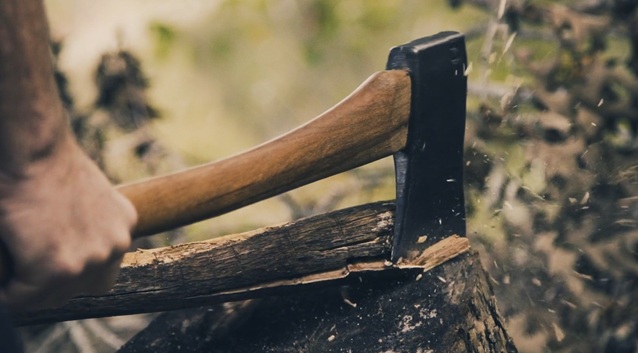
Put simply, a survival axe is a compact, lightweight and versatile cutting tool commonly seen in emergencies, camping, and bushcraft. Its manageable proportions, ranging from 12 to 24 inches in overall length, slot it right in the middle of larger felling axes and compact hand hatchets, ensuring easy portability. The lower weight, topping out at just over 5 pounds in larger variants, means survival axes can be easily suspended from backpacks or belts and used for longer periods without triggering fatigue. The durable construction, with high-grade steel blade heads and quality wood or synthetic handles, shows that this is a tool built to last.
Common Design Features
Survival axes also differ from other axe types in overall design. Their cutting head or blade design errs on medium thickness and a convex grind edge, making the axes capable of chopping and cutting larger logs as well as splitting smaller wood pieces. Versatility also stems from the reinforced rear hammer poll used to drive tent stakes or for light hammering tasks.
Handles are commonly made from vibration-resistant materials, including hardwoods like ash or hickory, as well as synthetics such as fibreglass, plastic, and composite blends that offer comfort and weather resistance. To ensure all-day usage, designs decently balance weight between the head and handle, providing good power for heavy-duty cutting, chopping and wood splitting. Additional features, including pry bars, nail pullers and handle cutouts, extend usage and provide easier transport and storage, among other benefits.
Typical Uses
More compact than larger axe designs and more versatile than simple knives, survival axes are multi-purpose tools useful across a wide range of outdoor settings and activities. Key uses include:
- Firewood processing: Use a survival axe to split logs, chop kindling, and fell smaller trees or limb branches for firewood.
- Shelter construction: Chop and trim branches, logs and limbs used for emergency shelters or temporary hut or log structures. Hammering polls are effective when driving tent stakes and wooden poles, while sharp blade edges provide the precision for sturdy joints in shelters or wood furniture.
- Bushcraft: Deploy survival or bushcraft axes when shaping or flattening wood (for instance, in wooden utensils), creating sharpened hunting stakes or clearing overgrowth and campsites.
- Emergencies and self-defence: Ensure protection against dangerous animals and other threats. Use survival axes to break through ice or car glass in accidents, and place branches cut with survival axes under tires to retrieve a vehicle stuck in mud or snow.
Survival Axe Types
While not a distinct or single category, survival axes can be grouped into several types based on usage, size and design features. Common examples include larger camp axes, with sizes up to 24 inches and 2-pound heads. They are ideal for general chopping and clearing tasks.
Smaller and lighter tomahawks are favoured for their versatility, offering more precision for cutting and carving, and sometimes feature removable heads that can also be used for scraping. For outright durability in heavy-duty logging and chopping, go with full-tang axes or hatchets, constructed from a single steel piece in both the head and handle and layered with soft rubber or composite materials for better control. Multi-tool axes also exist, combining extra functions like prying bars and saws for added utility.
Key Buying Considerations
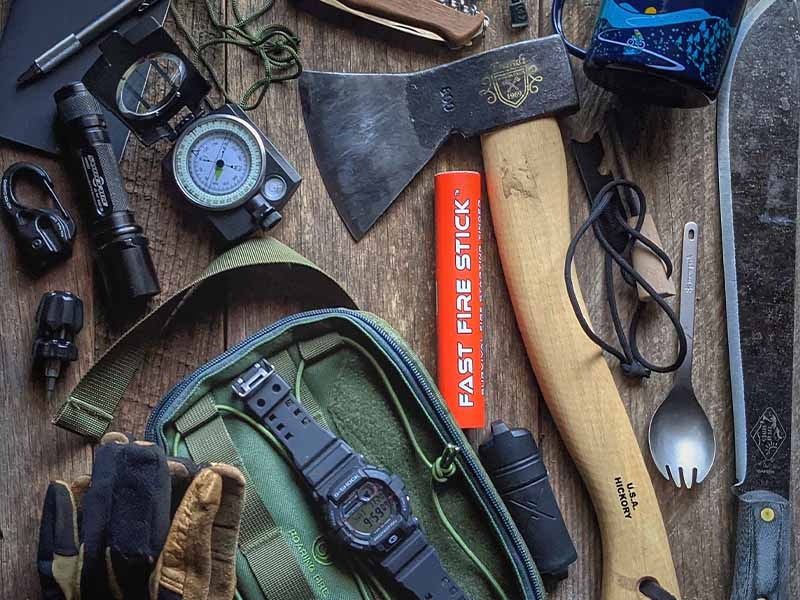
Choosing an axe that lives up to its “survival” moniker means careful consideration about weight, length, blade shape and materials. You’ll want something that’s easy to use, fulfils common cutting tasks, and can stand daily use and abuse.
Axe head weights range between half a pound in small hatchets to over 8 pounds in larger splitting mauls. The sweet spot for survival axes is roughly 2 or 3 pounds, offering balanced use for firewood cutting and processing, as well as common campsite chores and enough heft in emergencies. Going heavier hurts portability, but extends use with larger logs. Conversely, undersizing the axe and axe head means reduced cutting power (for instance, in clearing thicker branches), but more precision for carving and light splitting. Choose weights according to usage.
Next is handle length. This determines control and swing force – the latter is served better with longer handles. Choose shorter 12-18 inch handles for more precision, medium 19-23 inch handles for firewood processing and building shelters, or larger 24 inches and above for heavy chopping and felling tasks. Consider blade designs, too. Thicker, wedge-shaped cutting heads are effective with similarly sized logs and branches, while thinner blades excel in carving, shaping and slicing, though they will blunt easily for more demanding tasks.
Lastly, focus on material choice for long-term durability. High-carbon steel offers strong edge retention and is easier to sharpen, stainless steel provides better corrosion resistance, and forged steel delivers maximum cutting strength and overall durability for demanding use. For handles, hardwoods are the traditional choice, but newer axe varieties can benefit from weather-resistant fibreglass or composite handles. Needless to say, the more premium materials, the higher the cost.



About Author

alex
?You can always edit a bad page. You can’t edit a blank page. Likes: ❤️ Beer ?, Pizza ? Dislikes:? Mice?, Barber ? Favorite song: ? Hurts - Wonderful Life