
Choosing a Queen Headboard: Important Things to Consider
In any well-designed bedroom, the headboard acts as the visual anchor. It’s the first thing your eye lands on and the element that quietly sets the tone for the entire space. Whether it’s a serene guest room or a statement-making master suite. A thoughtfully chosen headboard brings balance, frames the bed, and adds a sense of intention that plain walls can’t replicate.
But a headboard is more than a decorative backdrop. Beyond aesthetics, it plays a functional role in comfort, support, and long-term durability. The queen bed standard is popular for good reason. A typical queen mattress measures around 152 cm wide by 203 cm long, offering generous sleeping space without overwhelming most bedrooms. Headboards designed for queen beds usually align with this width, which makes understanding measurements and design variations essential before you commit.
Important Measurement Considerations
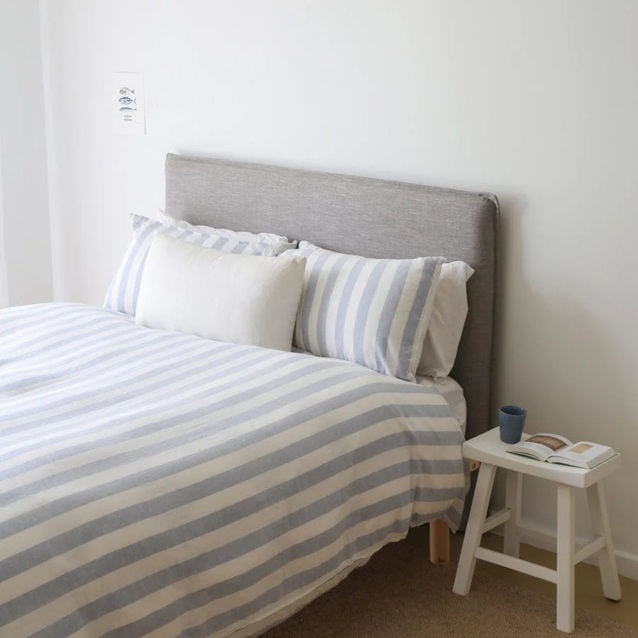
The right choice considers how you sit up in bed, how the piece interacts with your mattress and frame, and how it fits within the proportions of the room itself. This is especially important when shopping for a queen headboard modern in style, where clean lines and thoughtful scale are central to the design.
The “Total Width” Rule
One of the most common surprises for buyers is discovering that not all queen headboards measure exactly 152 cm wide. Many designs intentionally extend beyond the mattress width. Wingback styles, wrap-around panels, and luxury hotel-inspired designs may span 165 cm, 180 cm, or even more. This added width can create a dramatic, high-end look, but it requires adequate wall space on either side of the bed.
Before purchasing, measure not just the mattress, but the full wall area where the bed will sit. Account for bedside tables, wall sconces, and walking clearance. A wider headboard can look stunning, but only if the room can comfortably support it.
Height & Proportions
Headboard height plays a crucial role in how balanced the room feels. In rooms with standard ceilings, headboards between 120 and 150 cm high tend to work well. Taller ceilings can accommodate more dramatic designs, while lower ceilings benefit from streamlined, horizontal silhouettes. Also consider what’s happening behind the bed. Windows, artwork, or architectural features like panelling can clash with overly tall headboards. The goal is visual harmony, not competition.
Mattress Thickness
Modern mattresses are often much thicker than older styles, sometimes reaching 30–40 cm in height. If a headboard starts too high off the floor, you may end up with an awkward gap between the mattress and the base of the headboard. Ideally, the bottom of the headboard should sit low enough to visually “hug” the mattress, creating a cohesive, grounded look.
Mounting Types: Finding the Right Fit
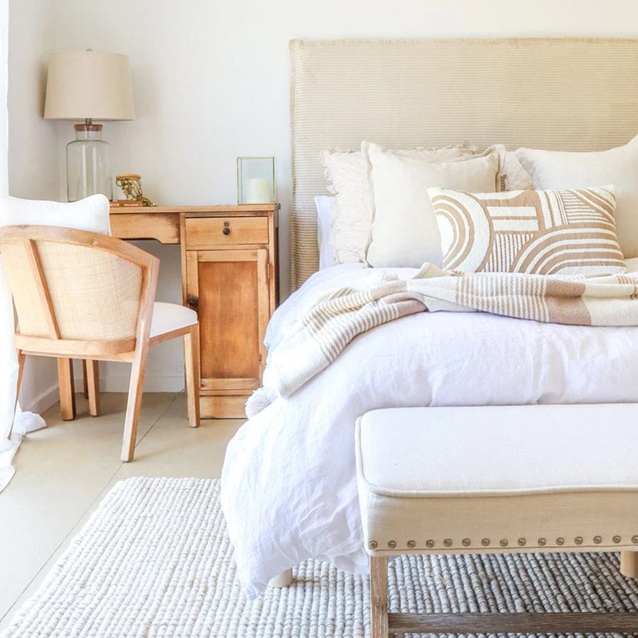
Wall-Mounted
Wall-mounted headboards deliver a sleek, high-end appearance and are ideal for contemporary interiors. They save floor space and allow for flexible bed-frame choices underneath. This option works best when you’re confident about placement, as repositioning later requires new wall fixings.
Bed-Frame Mounted
This is the most common and versatile mounting style. Bed-frame-mounted headboards attach directly to the bed base using brackets. When shopping, check whether the headboard includes universal mounting hardware or requires a specific frame type. Compatibility matters, especially if you plan to upgrade your bed base in the future.
Freestanding
Freestanding or leaning headboards are less common but appealing for renters or those who like flexibility. They stand behind the bed, sometimes secured with discreet anti-slip systems. While easy to install, they may not feel as solid as mounted options, especially with heavier materials.
Material Selection & Durability
Upholstered (Fabric or Velvet)
Upholstered headboards are prized for comfort. They’re ideal if you enjoy reading or working in bed, offering a soft, supportive surface. Velvet adds a touch of luxury, while woven fabrics feel relaxed and timeless. The trade-off is maintenance. Lighter fabrics may require regular cleaning, especially in homes with pets or children.
Wood and Metal
Wood and metal headboards are champions of durability. They’re easy to clean, resistant to wear, and excellent for allergy-sensitive households due to their low-dust surfaces. Wood brings warmth and character, while metal suits minimalist or industrial interiors.
Natural Fibres
Natural fibre headboards introduce texture without visual heaviness. They work beautifully in coastal, bohemian, or Scandinavian-inspired bedrooms. While not as plush as upholstered styles, they add depth and interest while maintaining an airy feel.
Styling Your Queen Headboard
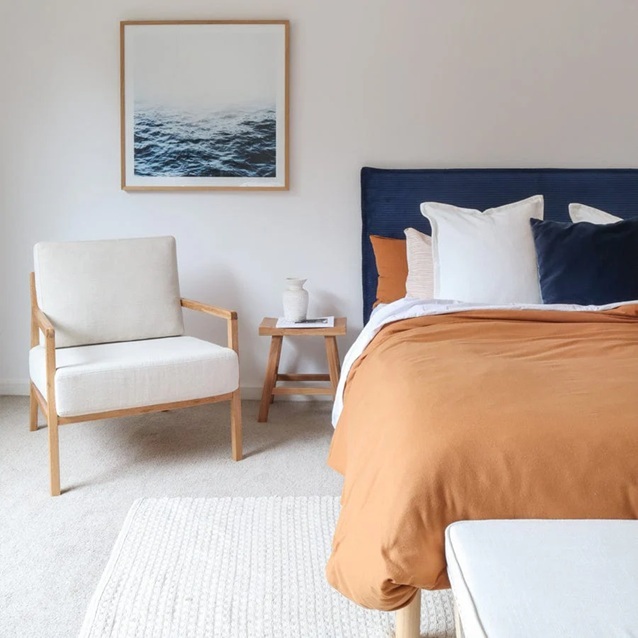
A headboard should feel like it belongs in the room, not like an afterthought. Matching architectural elements is a smart starting point. Ornate moulding pairs well with upholstered or carved wood designs, while exposed concrete or steel beams call for clean-lined, modern silhouettes. Colour psychology also matters. Bold hues create a dramatic focal point. Neutral tones like beige, grey, or soft taupe offer long-term versatility and make seasonal styling easier. This is where a queen headboard’s modern aesthetic truly shines, blending simplicity with quiet sophistication.
Finally, consider how your headboard height influences pillow layering. Taller headboards allow for stacked cushions and decorative pillows without hiding the design. Shorter headboards benefit from a more restrained pillow arrangement to maintain balanced proportions.
Balancing Style & Substance
Choosing the right luxury queen headboard is a blend of measurement precision, material awareness, and personal style. Before purchasing, check width, height, mounting type, and mattress compatibility. Think about how you use your bed, your bedside table and your bedroom as a whole to create a cohesive look. A quality headboard is often a longer-term investment than the mattress itself. Trends may shift, but well-chosen materials, thoughtful proportions, and timeless design ensure your headboard remains a defining feature of the bedroom for years to come.


About Author

emily
?The first draft is just you telling yourself the story. Likes: ❤️Cats ?, Dogs?, Chocolate Icecream ? Dislikes:? White Wine?, Chinese food ? Favorite song: ? Ashlee - Alone With You