
The Importance of a Good TV Sound System and Your Audio Options
If you feel like TV audio has gotten worse, you’re not alone. As TVs have become thinner and sleeker, there’s simply no room left for powerful speakers. The result is stunning 4K visuals paired with muffled dialogue and flat action sequences. The good news? Upgrading your sound system completely transforms the experience.
What Are Your Options?
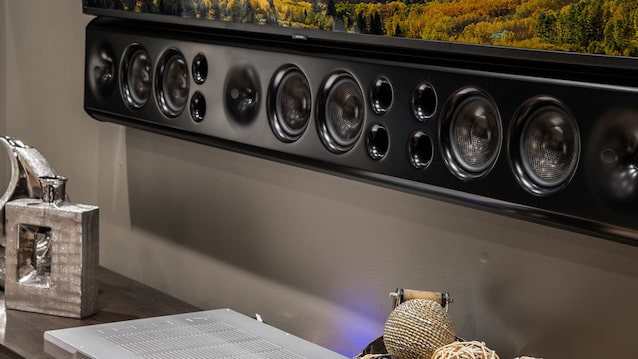
If you want to upgrade your TV’s sound, the choice usually comes down to the convenience and affordability of soundbars and the superior sound quality and higher cost of speakers.
Soundbars
A soundbar is a compact, space-saving device for anyone who wants better TV audio without turning the living room into a mini cinema installation. It sits neatly below or in front of the TV, takes up little space and usually needs minimal setup.
Many models can connect to your TV with a single wire. The soundbar itself plugs into a power outlet. Some soundbars come with a wireless subwoofer. The subwoofer doesn’t need a cable to the soundbar, but it still needs to be plugged into a power outlet. You can then place it elsewhere in the room.
Next, soundbars are generally more affordable than putting together a full speaker system. This makes them an easy upgrade when you want clearer sound without a big project.
Apart from being more affordable than putting together a full speaker system, they can also be more versatile. Many soundbars can do more than play TV audio. Depending on the model, you may be able to connect your phone via Bluetooth and use the soundbar to play music, podcasts and other audio when the TV is off.
The downside? That slim bar has its limits. You won’t get quite the same depth, separation or room-filling sound as a proper speaker setup, particularly when it comes to bass and creating a convincing surround-sound effect.
And while a soundbar can look sleek and almost disappear beneath your TV, adding a subwoofer or rear speakers can quickly make your once-simple setup a little less simple. Still, if you value easy installation and minimal clutter, a soundbar is hard to beat.
Speakers
If richer, more powerful and more immersive sound is your priority, then speakers are the way to go. Separate speakers give sound more room to breathe, helping you hear clearer dialogue, fuller music and more detail in movie soundtracks.
Add a subwoofer, and you can get deeper bass for a fuller sound. You also have more flexibility to build a system around your space and upgrade individual components later.
Of course, better sound often comes with more equipment. Speakers take up more floor or shelf space, and a multi-speaker setup can require more planning and installation than placing a soundbar under your TV.
There’s also the aesthetic factor. Some people love the look of speakers as part of their entertainment setup. If you’re happy to give up some space and simplicity for a more immersive sound, speakers can be worth it.
Other Things to Try
If a soundbar or speakers aren’t an option (maybe you’re renting, don’t have much space or don’t want another piece of tech in the room), there are other ways to get more from your TV’s built-in sound. You may be surprised by how much difference a few small tweaks can make.
Move the TV
Where your TV sits can affect how sound travels around the room. For example, if it’s pushed tightly against a wall, tucked inside a cabinet or surrounded by objects, its speakers may struggle to project sound clearly. Try moving it away from furniture or walls where possible and make sure nothing is blocking the speaker openings.
Change the Sound Mode
Your TV probably has several sound modes, such as Standard, Movie, Music or Voice. Switching between them can make a noticeable difference depending on what you are watching.
For instance, a Voice or Clear Voice mode can make dialogue easier to hear. A Movie mode may give films a fuller sound.
Adjust the Equalizer
If your TV lets you manually adjust bass, treble and mid-range frequencies, try changing these settings to see what sounds best to you. Reducing excessive bass can make dialogue less muddy. Slightly increasing treble or mid-range frequencies can help voices stand out.
Turn on Dialogue Enhancement
Some TVs have a dedicated dialogue or speech enhancement setting. This boosts the frequencies used for human speech, making conversations easier to follow without necessarily turning up the overall volume.
Try Volume Levelling
If you’re constantly reaching for the remote because explosions are deafening but dialogue is barely audible, look for a volume levelling or auto-volume setting. It can reduce those dramatic jumps between quiet and loud scenes.
Consider the Room
Hard surfaces such as bare floors, glass and large empty walls can make sound bounce around the room. Adding a rug, curtains or soft furnishings can help reduce echoes and make speech sound clearer.



About Author

alex
?You can always edit a bad page. You can’t edit a blank page. Likes: ❤️ Beer ?, Pizza ? Dislikes:? Mice?, Barber ? Favorite song: ? Hurts - Wonderful Life